
Bridal Hair and Makeup Pricing: Cost the Whole Booking
Published by MyBreakeven. Report a calculation or content issue to support@mybreakeven.com.
Price bridal hair and makeup from trials, products, travel and total artist hours. Test package scope, added services and the contribution needed.
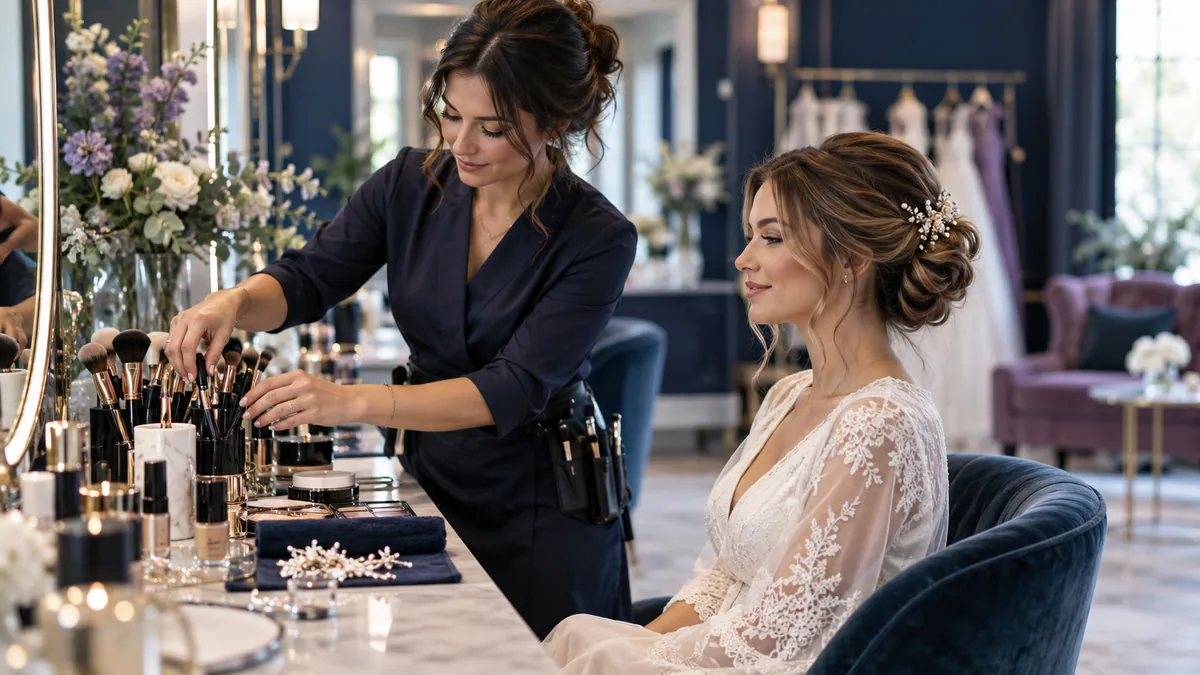
Price a bridal hair and makeup package from all appointment work, travel, supplies, extra staff and the contribution the booking needs to leave. The wedding-day chair time is only part of the job. Trials, preparation, messages and cleanup also use paid or owner hours. In the fictional example below, a $650 package leaves $285.50 before monthly commitments. The figures are USD planning assumptions, not recommended local wedding rates.
Quick answer
Define the package before pricing it: people served, trials, services, location, travel, included changes and staff hours. Add the direct booking costs and required contribution, then divide by one minus the percentage fee. Check whether the available schedule can deliver the work. A headline package price is misleading when its scope is unclear.
The direct answer: one bride and one trial
Assume a package covers one trial and wedding-day hair and makeup for one bride. Trial work takes two worker-hours, wedding-day services three, and preparation, messages and cleanup one. Total delivery work is six worker-hours at $35 per hour, or $210.
Products and disposables cost $65. Travel and parking cost $70. The booking's incremental acquisition cost is $0 in this example because committed marketing sits in monthly overhead. Direct costs before a percentage fee total $345.
At $650, a 3% processing fee costs $19.50. Contribution is $650 − $345 − $19.50 = $285.50, or 43.92% of package revenue. That contribution still needs to cover the salon's fixed commitments and owner income.
Suppose the booking needs to leave $300 contribution. Required price is ($345 + $300) ÷ 0.97 = $664.9485, rounded upward to $664.95. A $665 package incurs a $19.95 fee and leaves $300.05 under the stated assumptions.
The $35 labor rate is a fictional loaded delivery cost, not an industry wage estimate. If the owner performs the work, distinguish compensation for delivering the service from the separate owner-pay target. Model the chosen boundary consistently; do not quietly treat owner hours as free or duplicate owner pay.
The salon service-pricing guide covers ordinary appointment economics. Bridal packages require a separate scope sheet because trials, travel and event timing can materially change the workload.
What changes the answer
Trials consume service time even if they happen weeks before the wedding. Include the agreed number and duration. A second trial or a changed look can add product and worker-hours; define whether that work is included or separately quoted.
Location changes travel, parking and setup. Count the team's total travel time according to your labor boundary. Two artists traveling for one hour each consume two worker-hours, even though the journey lasts one hour on the calendar.
Party size changes the staff needed to meet the finish time. Six guests requiring one hour each cannot be served by one artist in a three-hour window. Price the extra artists and setup before accepting a tightly timed package.
Early starts or split-location work can create costs beyond normal appointments. Use actual staffing arrangements and transport costs rather than adding an unexplained premium. The quote should explain the service scope the extra charge supports.
Product hygiene and disposables belong in direct costs where they change with the booking. Do not divide every new kit purchase by one wedding. Separate reusable stock, replacement assumptions and sale-dependent consumption.
Cancellation and rescheduling affect cash and availability. A payment collected before service is not automatically additional revenue. Final booking terms need clear customer communication and appropriate review; this planning worksheet does not prescribe enforceable cancellation rules.
Review the salon booked-hour capacity guide before selling a package that occupies the busiest part of the week. A profitable-looking wedding can displace several regular appointments.
Three worked scenarios
Add a bridesmaid service
Suppose an added service sells for $120 and requires 1.5 worker-hours at $35, plus $12 products. Direct cost before fees is $64.50. A 3% payment fee costs $3.60. Added contribution is $120 − $64.50 − $3.60 = $51.90.
That service looks positive in isolation. It is useful only if the agreed schedule can fit the extra work or if additional staffing has already been costed. If another artist must be booked for a minimum period, include that commitment before calling $51.90 the true gain.
A package with two artists
Consider a $1,200 booking with ten total worker-hours at $35, or $350 labor. Products cost $120, transport $100 and event-only equipment $50. Direct costs total $620 before a 3% fee of $36.
Contribution is $544, or 45.33%. If two artists share the work evenly, each performs five hours, but scheduling still needs to match the individual service sequence. Total worker-hours alone do not prove every guest can finish before the ceremony.
A longer trial
If the original six-hour booking becomes seven hours, direct labor rises by $35 and total non-fee cost becomes $380. At the original $650 price, contribution falls to $250.50.
To preserve the $300 target, price becomes ($380 + $300) ÷ 0.97 = $701.0309, or $701.04 rounded upward. The extra work has a visible cost. Whether the change is billable depends on the scope actually agreed with the customer.
How to run your own numbers
Use the salon break-even calculator with one package as the job unit. Enter the whole-package price, products, direct labor, travel and fees. Set delivery hours to total package worker-hours and compare the required monthly volume with available productive hours.
MyBreakeven supports other currencies. Use one currency and one unit throughout. A bridal-party package price paired with one person's product costs will overstate contribution.
Keep a package worksheet listing each person, service, artist, duration and finish deadline. Put trials on the schedule as well as the wedding day. Compare available staffing by date, because a monthly capacity total cannot show two weddings booked at the same time.
Record actual work after each completed booking. Compare quote hours with delivery hours, including communication and preparation. If trials consistently run longer than planned, revise future package scope rather than treating the extra hours as an unexplained profit loss.
The salon profit-margin guide connects package contribution with fixed commitments and owner pay. A positive booking does not establish that the salon's entire month will be profitable.
Common mistakes
Pricing only wedding-day chair time leaves trials and preparation unfunded. Include the complete booking workload.
Counting elapsed event time instead of total worker-hours understates labor for multiple artists. Multiply time by the people doing the work.
Bundling unlimited changes into a fixed quote creates uncertain scope. Define the included services and trials before costing them.
Charging the whole kit purchase to each booking overstates direct consumption. Separate reusable equipment from products actually used.
Treating owner labor as free inflates contribution, while adding owner delivery pay and the same owner-pay target twice understates it. State your chosen boundary.
Calling deposits extra revenue duplicates the completed package price. Reconcile advance and final payments against the one agreed booking value.
FAQs
Should a trial be included in the package?
That is a commercial scope choice. If it is included, cost its time and products explicitly. If it is separate, explain its price and whether any amount is later credited to the wedding booking.
How do I price a larger bridal party?
Cost each service and the total staffing needed to meet the deadline. Some expenses are per person, while others are per booking. Recalculate artist minimum commitments and travel rather than simply multiplying the bride's package price.
Is owner time a direct cost?
It can be for a delivery-cost model, provided owner compensation is handled consistently. Keep the owner's service work distinct from the wider income target. Do not count the same payment twice.
Can I use local competitors' package prices?
They can help you understand the market, but their included scope and costs may differ. Build your own price floor first. The calculation cannot establish what customers will pay for your specific service.
What if the venue changes?
Recalculate travel, setup and staff time from the revised location. Check whether the agreed quote allows a change. A planning model helps explain cost differences but does not replace clear booking terms.
Does a high package price mean high profit?
No. A larger package may include more people, artists and travel. Compare the contribution after the complete direct workload, then test the salon's monthly commitments and capacity.
Closing takeaways
- Define people, trials, location and included services first.
- Cost all worker-hours, including preparation and travel where relevant.
- Check the finish-time schedule alongside monthly capacity.
- Separate advance payments from the total booking revenue.
Explore related articles in the business guide library.
Planning estimates only—not accounting, tax, legal or lending advice.