THE COLLECTION5 guides
Business funding & loans
Match the funding to the cash need
Compare funding purposes, net proceeds, grant conditions and the dated cash source for repayment.

START HERE
 MyBreakeven
Practical guides to pricing, startup costs, margins and break-even—written for owners doing the work.
PricingStartupMarginsBreak-even
One clear place for your next business decision.
Match the funding to the cash need
Compare funding purposes, net proceeds, grant conditions and the dated cash source for repayment.
Fund the role and the productive hours
Connect recruitment, compensation, productive hours and the payroll record-to-payment process.

Start with a strong foundation
Screen demand, choose a business model and turn evidence into a feasible launch.

Make your next move with clarity
Connect goals to resources, evaluate growth choices and prepare a response when assumptions fail.

Turn your records into a clear picture
Follow transactions through the ledger, accruals and statements before interpreting reported profit.
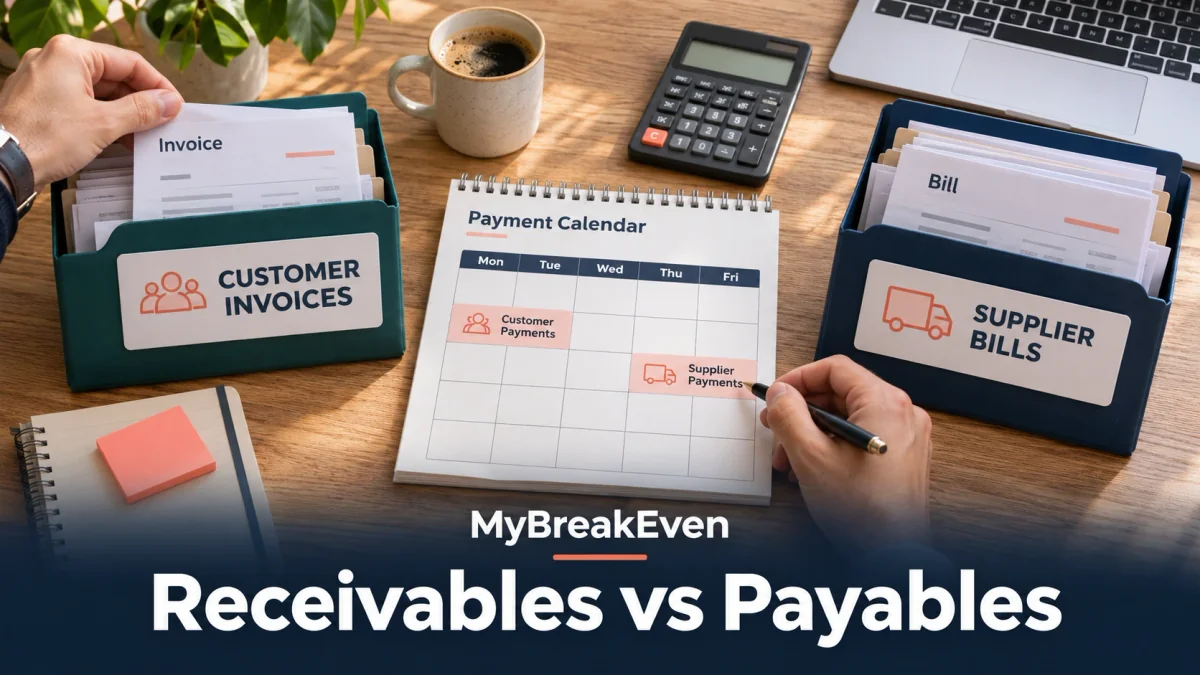
Follow the money in and out
Follow invoices, obligations, collections and expected credit losses through matching records.
Understand what your assets cost
Build an asset schedule, choose a supported method and reconcile accumulated depreciation.

Know where every dollar goes
Classify costs, trace work and reconcile allocation, volume effects and cost-control actions.

Build a price that works for your business
Choose a pricing method, reconcile fees and test the contribution customers and orders leave.

Know what it takes to cover your costs
Translate contribution into sales targets and test capacity, product mix and the sales cushion.

Connect your plan with actual performance
Build a capacity-aware forecast and compare actual results with a consistent budget and cost basis.

Keep stock, commitments and cash in view
Reconcile cash movements, working-capital timing and available inventory before committing money.

Compare the value of your next investment
Compare dated project cash flows, recovery, required returns and funding constraints.

Plan the long view, one assumption at a time
Separate long-term spending assumptions from loan terms, fees and refinancing recovery.

Put your results in the right perspective
Use a consistent denominator and distinguish campaign revenue from profit and return.

Find the costs, capacity and pricing questions that match your business.
Quotes, contracts and recurring client economics.
16 guidesLandscapingCrew costs, seasonal cash and route capacity.
17 guidesMobile DetailingPackages, travel costs and productive hours.
12 guidesSalonService pricing, repeat visits and stylist capacity.
11 guidesRestaurantMenu costs, sales channels and kitchen capacity.
23 guidesPhotographyAssignment costs, editing time and package pricing.
12 guidesE-commerceOrder margins, stock, shipping and returns.
17 guidesAgencyRetainers, project scope and billable team hours.
14 guidesSearch pricing, startup costs, profitability, and break-even strategy across every guide.
Search the whole site above, or filter the guides below by topic and category.
242 guides
Match demand with worker-hours, machine time and bottlenecks. Follow a checked capacity case, compare alternatives and keep a practical review record.
Read featured guideBuild a business continuity plan around critical work, dependencies and tested recovery. Separate canceled contribution from delayed cash in an original case.
Read guideUnderstand gross pay, net pay and employer cost with a checked paycheck example. Reconcile deductions, reimbursements, pay frequency and bank deposits.
Read guideOrganize small-business HR around roles, onboarding, training and payroll handoffs. Follow checked time and rate-change cases with a practical review record.
Read guideUnderstand product lifecycle management through controlled versions, release changes and service records. Follow a checked revision-mix and rework-cost case.
Read guideUnderstand a US LLC, legal structure versus tax classification, owner funding and record controls, with a checked business example and practical review record.
Read guideClassify startup payments as expenses, assets, deposits or funding. Reconcile a checked launch example and keep book treatment separate from US tax recovery.
Read guideEvaluate cloud accounting through workflows, access controls, reconciliation and exit records. Check an original migration case before comparing complete costs.
Read guideDistinguish capital expenditure from operating expenses, reconcile asset cost and depreciation, and test cash funding with a checked original business example.
Read guideCalculate business net income from matching revenue and expenses. Follow gross profit, operating income, tax and retained earnings through a checked case.
Read guideBuild a financial-reporting workflow from reconciled records to a reviewed statement package. Follow a checked cash, equity and balance-sheet control example.
Read guideAnalyze operating, investing and financing cash flows with a reconciled original case. Separate profit conversion, investment funding and future payment timing.
Read guideCompare small-business valuation methods using a checked earnings adjustment, enterprise-to-equity bridge and cash-flow sensitivity, with a review record.
Read guidePlan business expansion with incremental contribution, displaced sales, capacity and dated cash needs. Follow a reconciled case and an editable decision record.
Read guideCalculate customer acquisition cost with matched costs and new-customer cohorts. Compare channels, repeat contribution and cash recovery in a checked example.
Read guideCalculate gross profit and gross margin from net revenue and matched COGS. Reconcile a checked inventory case and separate fees, contribution and net income.
Read guideCompare differential costs on the same horizon, separate sunk and committed amounts, and reconcile cash and opportunity-cost results in a checked example.
Read guideReconcile gross sales, discounts, returns and allowances to net revenue. Follow the same example into receivables, processor fees and bank cash.
Read guideCompare inventory valuation methods with a reconciled FIFO and weighted-average example, framework boundaries, write-downs and a practical review record.
Read guideBuild a small-business recruitment strategy from workload, role evidence and a comparable hiring funnel. Track cost, productive capacity and hiring quality.
Read guideCompare business loan structures using net proceeds, payment timing and total cost. Follow a checked repayment example and build an offer-comparison record.
Read guidePlan startup business loans from a dated funding gap, founder contribution and repayment evidence. Compare readiness, net proceeds and delayed-opening risk.
Read guideFind and screen small-business grants using official eligibility and award terms. Separate application effort, matching funds and reimbursement cash timing.
Read guideCompare invoice financing and factoring with a reconciled advance, reserve and fee example. Check who collects, recourse, eligibility and payment timing.
Read guideEvaluate working-capital loans with a dated cash gap, draw and repayment example. Separate seasonal timing needs from recurring operating losses and renewals.
Read guideFollow a small-business payroll workflow from time records to gross pay, withholding liabilities and payment reconciliation, with a checked fictional example.
Read guideCompare employee compensation packages beyond base salary. Reconcile recurring employer cost, paid leave, productive hours and first-year cash requirements.
Read guideClassify product and period costs, follow inventory into cost of goods sold, and reconcile a manufacturing example without confusing fixed and variable costs.
Read guideCompare cost-plus, value-based, competitive and penetration pricing using contribution, demand and capacity. Includes a service case and pricing test record.
Read guideModel a penetration pricing launch with acquisition cost, repeat orders and a clear exit price. Compare incremental contribution, retention and capacity risks.
Read guideCalculate cost-plus pricing from a clear cost base, distinguish markup from margin, and include payment fees without counting overhead twice or assuming sales.
Read guideCompare capital budgeting projects using dated cash flows, NPV, payback and a funding limit. Follow an equipment case with downside and discount-rate checks.
Read guideCalculate payback for equal and uneven cash flows, handle partial years and end-year timing, and compare discounted recovery with the limits of simple payback.
Read guideCalculate WACC from debt and equity weights, reconcile the tax assumption, and test sensitivity. See when a company-wide rate does not fit a project cash flow.
Read guideEstimate cost of equity with CAPM, align risk-free rate, beta and market premium assumptions, and compare a dividend-growth cross-check with clear limitations.
Read guideReconcile inventory receipts, sales, returns and damage in a small-business stock record. Link available units, purchase commitments and cash in a clear case.
Read guideRecord unpaid period costs with supported accruals, reconcile the liability and compare direct settlement with optional reversing entries in a checked example.
Read guideReconcile opening retained earnings, net income and declared dividends. Separate cash, contributed capital and any supported opening-balance adjustments.
Read guideCalculate marginal cost from matching changes in cost and output. Reconcile a fictional batch example, a capacity step and an additional-order decision.
Read guideCalculate average cost per unit using matched costs and output. Check fixed-cost spreading, capacity steps, unsold units and the limits of a unit average.
Read guideControl costs with matched records, clear action owners and verified results. Reconcile a fictional volume, usage and price case without double counting.
Read guideCompare incremental costs and benefits against a baseline. Check a discounted example, uncertainty, payback and nonfinancial conditions before deciding.
Read guideBuild a reconciled activity-based costing example with three pools, two products and a separate unused-capacity scenario. Test drivers before using the result.
Read guideCompare absorption and variable costing using two months of production and sales. Reconcile fixed manufacturing overhead, inventory and operating profit.
Read guideCompare earned revenue, incurred expenses and cash timing using one reconciled service-business example. Track receivables, prepayments and customer advances.
Read guideOrganize transaction evidence, reconcile cash and customer balances, review adjustments and close the month with an original bank-reconciliation example.
Read guideTrace one service-business month through journal entries, ledger balances, adjustments, financial statements and closing with checked trial-balance totals.
Read guideUse an editable account-level ledger with posting references, debit and credit columns, a checked cash example and a matching trial-balance reconciliation.
Read guideCompare straight-line, units-of-production and declining-balance depreciation using asset cost, residual value and life assumptions, with checked effects.
Read guideReconcile asset cost, current depreciation and disposal removals to closing accumulated depreciation and carrying amount using a checked original example.
Read guideCalculate straight-line depreciation with supported cost, residual value, useful life and partial periods. Reconcile a complete editable sixty-month schedule.
Read guideBuild an illustrative receivables aging estimate and reconcile opening allowance, write-offs, recoveries and the provision needed for the closing balance.
Read guideSeparate bad-debt expense recognition, an allowance write-off and a later recovery with balanced entries and a reconciled gross, allowance and net-AR example.
Read guideBuild a business risk register with impact ranges, control costs, owners and response triggers. Compare expected exposure with a dated cash stress case.
Read guideCompare online services, digital products and ecommerce using contribution, owner-hours, demand evidence and the time between paying costs and collecting cash.
Read guideLaunch a defined online offer with a small demand test, checked payment and delivery workflow, checked unit-economics case and a launch acceptance worksheet.
Read guidePlan a home-based business with separate workspace, incremental costs, operating limits, capacity and a location-specific verification record.
Read guideFollow eight reconciled transactions through assets, liabilities and equity. Separate profit, borrowing, customer collections and owner withdrawals.
Read guideClassify cash, receivables, inventory and prepayments at one reporting date. Reconcile a current-assets schedule and separate its total from available cash.
Read guideClassify supplier bills, payroll accruals, advances and current debt. Reconcile a liability schedule and separate recognition from cash payment dates.
Read guideBuild an invoice-to-collection workflow with a reconciled customer ledger, credits, due-date aging, disputes and cash application. Includes an editable record.
Read guideFollow supplier invoices through receipt checks, approval, payment and reconciliation. Use a checked payable ledger, exception example and editable worksheet.
Read guideBuild a dated landscaping cash schedule for materials, payroll and customer receipts. Test the funding gap, minimum cash floor and delayed-payment scenario.
Read guideCompare six small-business models using customer evidence, startup cash, contribution and owner-hours. Use a practical screening worksheet before investing.
Read guideFollow a practical startup roadmap from customer evidence to funding, records and launch. Reconcile an original cash budget and review the first month.
Read guideWork through a nine-block business model example, reconcile its revenue and delivery costs, and turn assumptions into tests using an editable record.
Read guideUse an editable client proposal with clear deliverables, exclusions, pricing assumptions, payment milestones and acceptance fields. Check the cost case first.
Read guideCompare retention, pricing, added volume and channel growth with original financial cases. Test contribution, bottlenecks and funding before committing.
Read guideAssess demand, delivery capacity, economics and funding with a worked feasibility study. Use explicit proceed, revise or stop conditions and an editable record.
Read guideTurn business goals into measurable drivers, ownership and review dates. Reconcile a service growth target with delivery hours, contribution and cash needs.
Read guideBuild a small-business strategy around customer choices, trade-offs and resources. Compare two original options and use a quarterly review record.
Read guideMeasure customer profit with a reconciled cost-to-serve example. Separate avoidable costs, shared overhead and cash timing before changing an account.
Read guideCompare ROAS and ROI using one campaign ledger. Include refunds, product costs and creative fees, and state the investment denominator before comparing returns.
Read guideBuild a sales forecast from units, price and customer evidence. Check capacity, separate bookings from cash and compare scenarios with an editable worksheet.
Read guideTest price, costs, volume, sales mix and capacity with CVP analysis. Reconcile break-even and target profit before accepting a higher fixed-cost commitment.
Read guideCalculate recruiting cost per completed hire, then build a first-year employment budget. Include internal time consistently without double-counting onboarding.
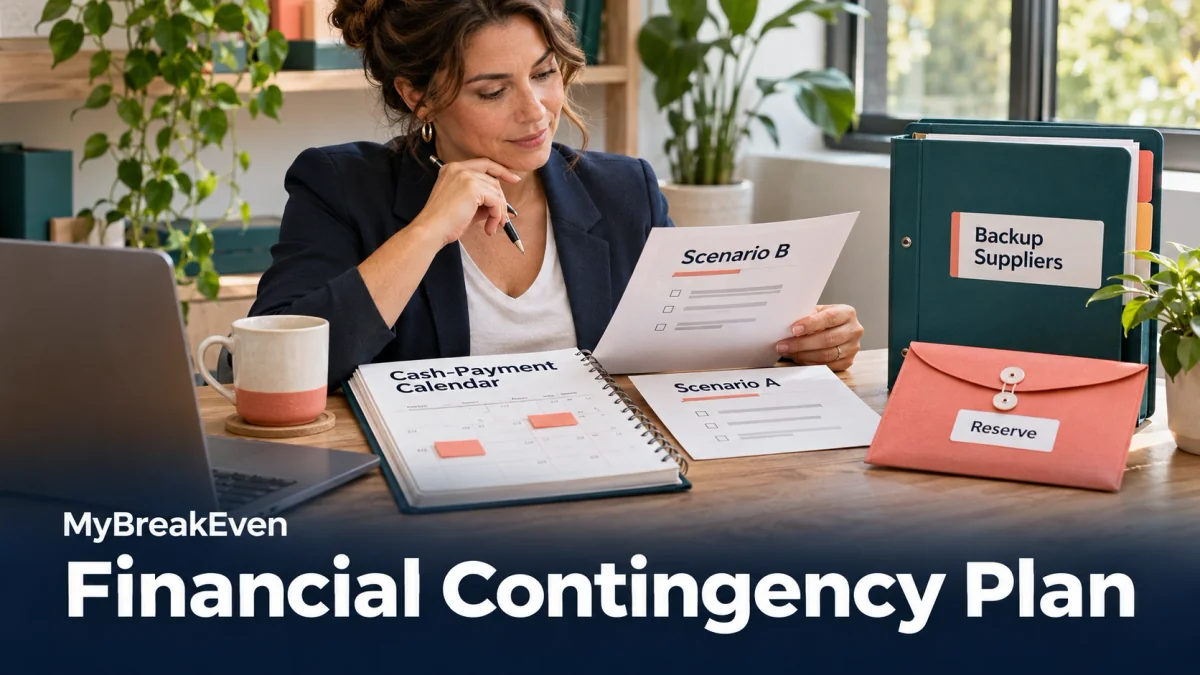
Read guideBuild a financial contingency plan with dated cash scenarios, triggers, owners and verified funding. Test an original cash-gap example and response worksheet.
Read guideCompare receivables and payables with matched entries. Reconcile an invoice, credit and partial payment without confusing revenue, expense and cash.
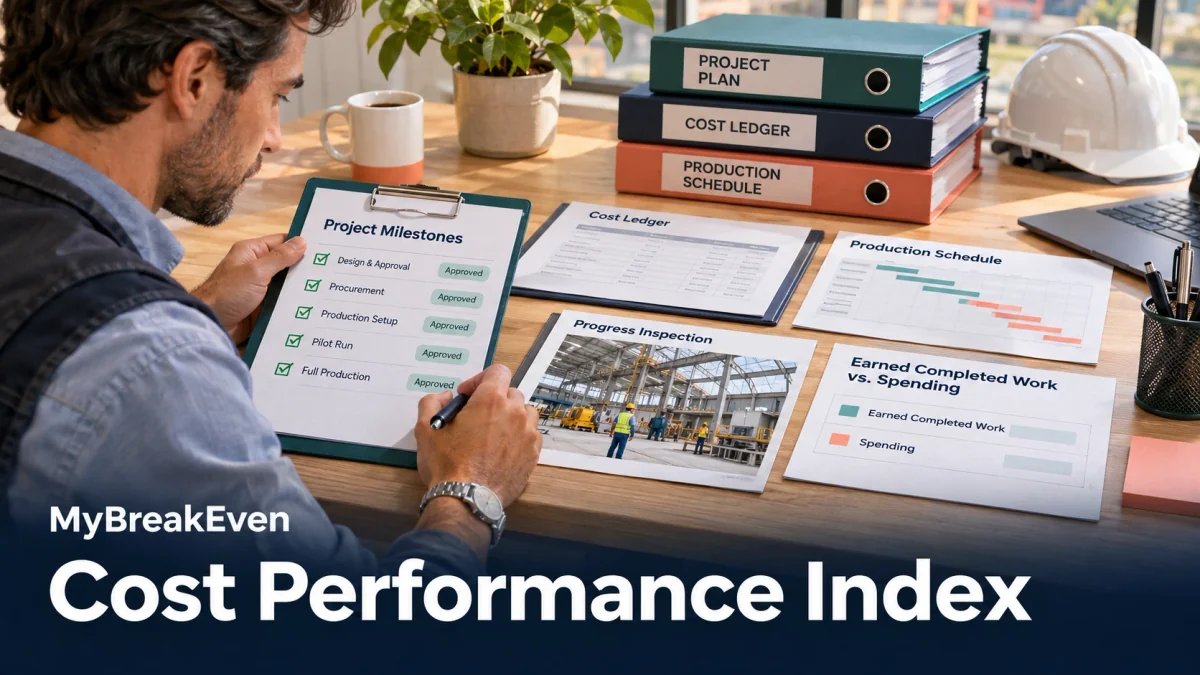
Read guideCalculate CPI from earned value and actual cost. Check weighted totals, separate project cost performance from margin and compare remaining-work forecasts.
Read guideCalculate profitability index from discounted cash flows. Reconcile NPV, compare project scale and avoid ranking indivisible investments by a ratio alone.
Read guideFive Malaysian restaurant owners reported faster break-even planning. Examine the evidence, then test an RM-based restaurant plan against food costs, delivery fees and capacity.
Read guideCompare FIRE, Coast FIRE and part-time-income targets with the same spending assumptions. Check current living costs, growth dates and real purchasing power.
Read guideTest withdrawal-rate assumptions against retirement length, return order, tax, healthcare and asset access. Follow an original two-year sequence-risk example.
Read guideAnalyze an income statement and two balance sheets. Reconcile ratios, average balances and why $20,000 fictional profit adds only $2,000 cash.
Read guideSolve a missing term in any position, verify cross products and distinguish a unique answer from inconsistent, invalid and nonunique zero cases.
Read guideBuild equivalent ratio tables with one scale factor. Follow original 5:2 recipe and 2:1 stock examples, quantity bars and part-to-whole checks.
Read guideCompare simple fee recovery with cash paid plus debt remaining at the same holding date. Reconcile an original fixed-rate example and an early-sale warning.
Read guideClassify upfront fees, financed charges, credits, points and escrow in a fictional quote. Reconcile new principal and closing cash without double counting.
Read guideCompare remaining mortgage term with shorter and longer refinance examples. Check payments, lifetime interest and remaining debt at the same five-year date.
Read guideCompare EBITDA, net income and operating cash flow using one reconciled business example. Trace receivables, inventory, interest, tax and equipment cash.
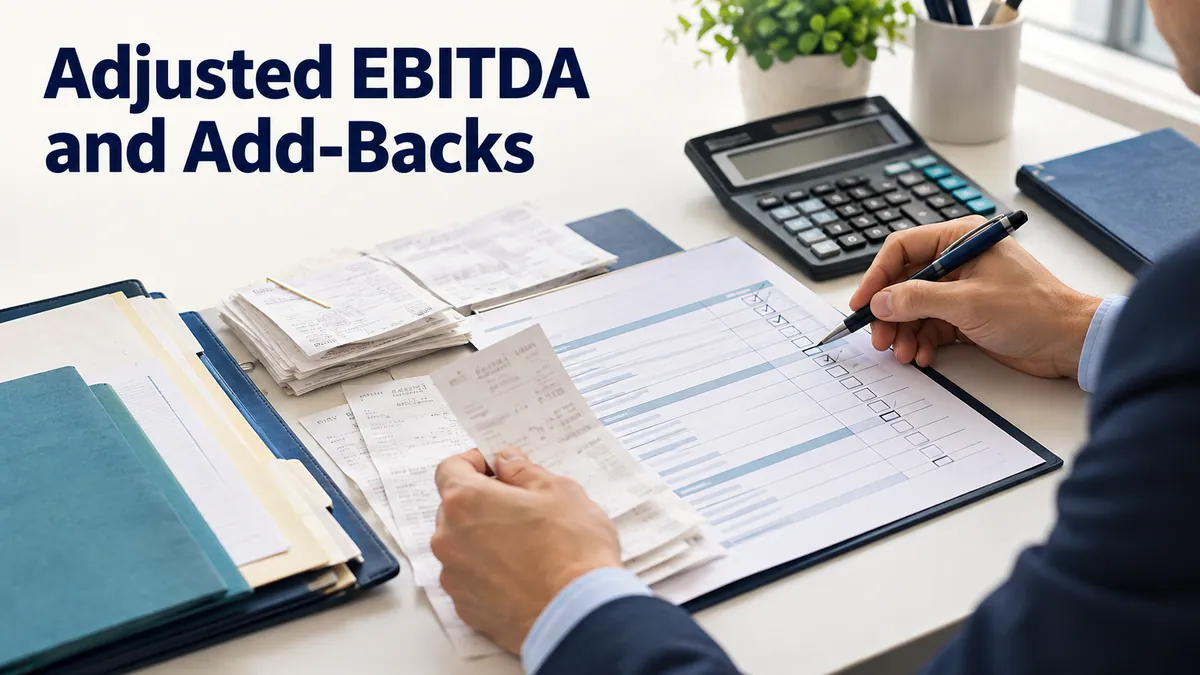
Read guideBuild a signed Adjusted EBITDA bridge with documented add-backs and deductions. Check recurring costs, gains, owner compensation and double counting.
Read guideCompare present and future value with a matched-date example. Understand compounding, discounting, inflation and the limits of fixed-rate projections.
Read guideCompare end-period and beginning-period payments with timelines and worked examples. Match contribution frequency, compounding and valuation date.
Read guideLearn the cash flow statement format with a complete example, direct and indirect reconciliation, balance-sheet checks and an editable CSV close schedule.
Read guideCalculate operating cash flow with direct and indirect methods, a reconciled example, working-capital sign rules and a checker with current-values CSV.
Read guideDiagnose cash flow problems with a four-week example, tested timing fixes, a weekly review routine and an editable recovery action plan for your business.
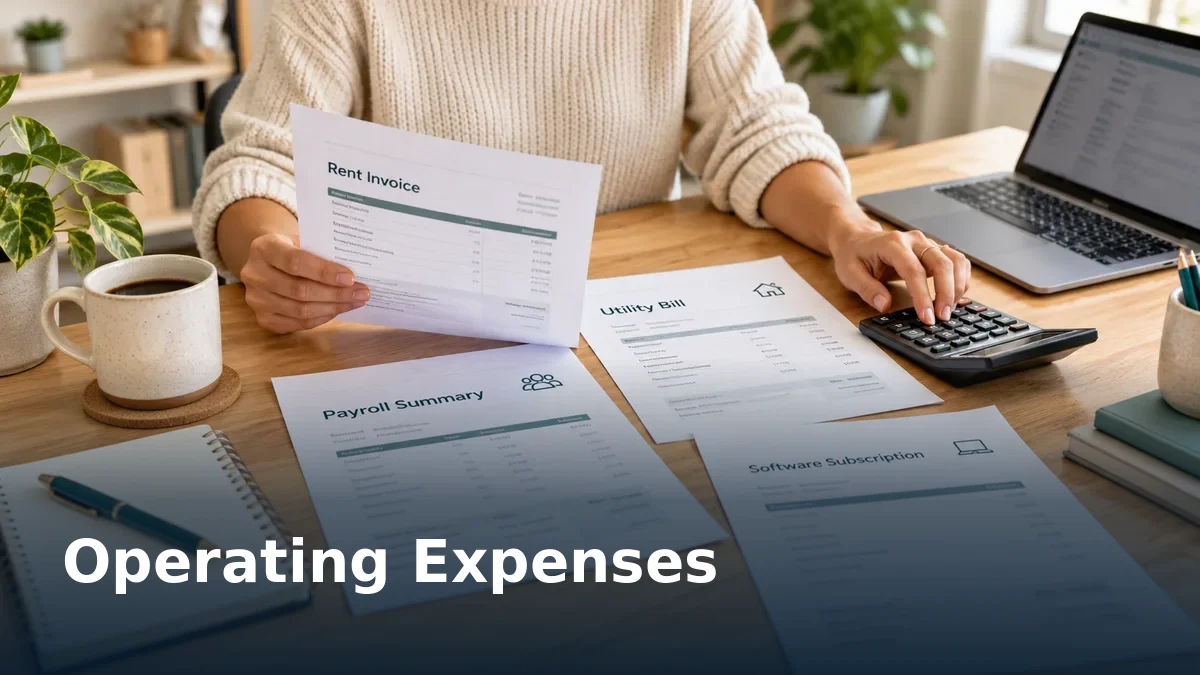
Read guideClassify operating expenses, separate COGS and equipment cash, and reconcile a checked expense report to operating income and margin.
Read guideBuild a rolling forecast with dated monthly assumptions, a worked service-business example and a free Excel template. Keep forecasts separate from the budget.
Read guideSee master budget components, a worked income and balance-sheet example, and a cash budget bridge. Use the calculator and editable CSV with clear assumptions.
Read guideUnderstand cost drivers with business examples, the allocation formula and a two-pool calculator. Compare bases without treating allocations as savings.
Read guideUse the job order costing formula, a worked job cost sheet and calculator. Compare process costing, check applied overhead and download the editable CSV.
Read guideBuild a flexible budget at actual activity, compare original and actual results, and reconcile volume and performance effects with a checked service example.
Read guideCompare make-or-buy relevant costs with a checked example, avoidable fixed costs, opportunity contribution and a calculator that keeps common costs separate.
Read guidePrepare a contribution margin income statement with a checked service-business example, editable CSV template and clear fixed-versus-variable cost boundaries.
Read guideSplit a mixed cost into fixed and variable components with a high-low calculator, six-month example, Excel formulas and checks for outliers and activity range.
Read guideBuild a restaurant cash flow forecast with a 13-week example. Check payroll, supplier dates, card payouts and minimum cash before a shortfall arrives.
Read guideCalculate COGS from opening inventory, net additions and closing stock. Check a $30,000 example, supplier credits, freight, losses and the gross-profit bridge.
Read guideCalculate working capital as current assets minus current liabilities. Check the $24,000 example, operating capital differences and the free Excel worksheet.
Read guideCalculate DSO using matched receivables, credit sales and period days. Compare averaging methods and translate late payment into a payroll cash scenario.
Read guidePlan cleaning contract cash needs with dated payroll and collection scenarios. Compare delayed payment, early receipts and a reserve before starting work.
Read guideReconcile cleaning estimates with actual worker-hours, supplies, travel and callbacks. Use a variance bridge to separate changed scope from delivery overruns.
Read guideCalculate cleaning customer acquisition cost and paid-visit payback. Compare complete cohorts, contribution, retention and collection timing before scaling ads.
Read guidePrice landscaping change orders using added costs, avoided purchases and customer credits. Preserve the original estimate and document schedule changes clearly.
Read guideBudget landscaping plant warranty work using replacements, return visits and supplier recovery. Use a claims record to compare the allowance with actual cost.
Read guideCalculate mobile detailing cancellation loss before and after departure. Compare replacement bookings, avoided costs and retained fees without double counting.
Read guideCalculate mobile detailing water refill cost per usable gallon, including paid refill time and travel. Compare supply options and route capacity before booking.
Read guideMeasure agency client concentration using revenue and contribution. Stress a major-client loss, replacement sales and payment timing before adding commitments.
Read guideCompare employee and freelancer costs against productive capacity and uncertain demand. Test monthly commitments, overflow and onboarding before hiring.
Read guideCompare agency project and retainer contribution over the same period. Calculate scope-hour ceilings, revision costs and fee-aware price floors before renewing.
Read guideCompare marketplace and own-store contribution after product, fulfillment, fees and acquisition. Test channel volume and fixed costs with clear examples.
Read guideBuild bridal hair and makeup packages from trials, artists, travel and service time. Use a scope worksheet and finish-time check before confirming a quote.
Read guideCalculate coffee drink contribution after ingredients, cups and fees. Compare bottleneck minutes, remake losses and add-ons before changing the menu.
Read guideCalculate SKU holding cost using average inventory at cost and explicit storage, capital and loss assumptions. Test bulk discounts against added stock time.
Read guideCalculate reorder timing from demand, lead time and usable stock position. Separate order quantity, supplier deposits and payment dates from the trigger.
Read guidePrice print packages using lab cost, shipping, design and fees. Test split shipments, replacement risk and revisions before offering a photo album add-on.
Read guideBuild a menu-engineering worksheet with contribution, popularity and kitchen time. Separate food-only contribution from all variable costs before repricing.
Read guideSet a restaurant event minimum using displaced contribution, setup costs and fees. Check guest guarantees, room charges and the final customer bill.
Read guideCompare dine-in, pickup and delivery using contribution, packaging, fees and kitchen time. Reconcile platform settlements without counting fees twice.
Read guideCalculate subscription box break-even from paid shipments, costs and churn. Test replacement spending, growth acquisition and the contribution needed.
Read guideSet a cleaning minimum from paid staff time, travel, supplies and fees. Compare short bookings, repeat-route savings and contribution per staff hour.
Read guideCalculate salon no-show cost from avoided expenses, sunk acquisition and collected fees. Compare replacements, owner pay and completed appointments.
Read guideCost catering from guaranteed guests, service labor, transport and fees. Test guest-count changes and compare estimated contribution with actual results.
Read guideCompare landscaping subcontractor cost with in-house delivery, avoidable payroll and freed hours. Add a dated supplier-payment plan before accepting the work.
Read guideCalculate retail break-even sales and receipts from basket contribution. Check the 354-receipt example, discounts, store traffic, staffing and stock cash.
Read guideBuild freelance financials from project price, costs, owner pay and delivery hours. Compare income goals with capacity and keep payment timing separate.
Read guideBuild a weekly cash flow forecast from opening cash, receipts and payments. Test late invoices, find the deepest shortfall and compare operating profit.
Read guideMeasure agency scope creep from extra worker-hours, costs and fees. Compare unpaid additions, revised quotes, client contribution and delivery capacity.
Read guideEvaluate bundles using contribution per visitor, displaced full-price orders, shipping and returns. Test whether higher basket revenue improves contribution.
Read guidePrice paint correction from preparation, polishing and handover hours. Compare one-stage and larger scopes, then check contribution and monthly capacity.
Read guideCalculate a mobile detailing travel fee from extra worker time, distance and fees. Compare cost recovery with contribution per hour and shared-route risk.
Read guideCalculate salon retail product margin after wholesale cost, discounts, stylist commission and fees. Compare gross margin with contribution before reordering.
Read guidePrice a salon membership from included services, redemption and stylist capacity. Compare credit, discount and service plans before setting an enrollment limit.
Read guideTest a free-shipping threshold against lost delivery revenue, added basket contribution and carrier costs. Compare matched traffic and realistic product mixes.
Read guidePrice snow removal from visit costs, seasonal commitments and fees. Compare snowfall workloads, customer offers and route capacity before quoting.
Read guideCalculate mulch installation cost from bed volume, supplier units, delivery and crew hours. Compare bags with bulk and test access overruns before quoting.
Read guideCalculate second-shooter cost with coverage, travel, handoff and extra editing. Set an add-on price floor and check lead delivery capacity before booking.
Read guideSeparate photography production and proposed usage fees. Compare scoped offers, incremental reuse costs and contribution against monthly delivery capacity.
Read guideCalculate ceramic coating contribution after preparation, labor and fees. Reconcile monthly overhead and owner pay, then test technician and bay capacity.
Read guideCalculate landscaping equipment cost per machine hour from ownership, use, fuel and repairs. Compare rental options and avoid counting capital costs twice.
Read guideMeasure landscaping crew utilization with consistent worker-hours. Separate fieldwork, travel and rework, then check service mix, scarce roles and job capacity.
Read guideBuild landscaping maintenance contract pricing from annual visits, labor and seasonal tasks. Test scope changes, monthly billing and peak crew capacity.
Read guideBuild a corporate headshot quote from setup, people photographed and retouched files. Test no-shows, extra images and capture time before setting a fee.
Read guideBuild product photography pricing per image from setup, styling and retouching. Compare batch sizes, revision costs and assignment delivery capacity.
Read guideEstimate move-out cleaning from agreed scope and crew hours. Price appliance extras, test overruns and compare actual contribution after the job.
Read guideCompare recurring and one-time cleaning using staff hours, acquisition payback and paid repeat visits. Test cancellations before offering a repeat discount.
Read guideCalculate a commercial cleaning contract price increase from actual costs and scope. Build a renewal proposal and check retained contribution after responses.
Read guideCalculate cleaning client churn cost from lost contribution, replacement costs and committed payroll. Test retention offers without assuming every client stays.
Read guideCalculate restaurant delivery contribution after commission, food, packaging, labor and promotions. Compare prices, direct pickup and kitchen capacity.
Read guideCompare profit break-even with cash needed to pay this month's bills. Work through invoice delays, equipment purchases and a small-business cash bridge.
Read guideCalculate the extra sales a discount needs to preserve contribution. Compare three offers, fees and the capacity required before launching a sale.
Read guideFind the customer loss a price increase can absorb while preserving contribution. Check service examples, changing costs and whole-customer rounding.
Read guideCompare contribution, operating and net profit margins using one reconciled example. See which costs each measure includes and the pricing question it answers.
Read guideCalculate a salon hair color service cost from grams used, waste, paid time and fees. Compare appointment scopes and include commission without double counting.
Read guideCalculate target profit sales and required units. Follow a checked 70-job example, include owner pay once, and test whether your working hours can deliver.
Read guideCalculate margin of safety in units, sales and percent. Check a $6,000 cushion and 33.33% example, then distinguish forecast risk from profit and cash.
Read guideCalculate operating leverage as contribution divided by operating profit. Check a DOL of 6, a 10% volume change and the limits near break-even.
Read guideFind the ROAS an order needs to cover ad spend after product cost, shipping, fees and returns. Includes a checked $100-order example and scenarios.
Read guideBuild a client-level P&L from retainer revenue, real team hours, contractors and overhead. See when scope creep turns a busy account weak on paper.
Read guideCalculate break-even for multiple products using contribution margins and a realistic sales mix. See a checked example and learn when the answer changes.
Read guideEstimate a post-construction clean from a site walk, crew hours, supplies, access and scope. Follow a worked bid with a practical client checklist.
Read guideCompare estimated and actual landscaping job costs. Trace a $307 overrun, check crew-hours and job margin, and improve the next quote without double counting.
Read guideCalculate photography mini-session profit after owner pay, event costs and editing. Set a paid-booking threshold and gallery-delivery cap before opening slots.
Read guidePrice a fleet detailing contract from vehicles, visit frequency, technician hours, supplies and route costs. Check a worked quote and fifth-visit risk.
Read guideBuild an office cleaning bid from a site walk, task frequency, paid crew hours, account costs, and target margin. Includes a worked monthly proposal.
Read guideCompare booth rent and commission from the salon owner's side using occupied chairs, service sales, labor costs and shared overhead.
Read guidePrice weekly and monthly detailing maintenance visits from labor, travel, plan frequency and real capacity instead of discounting a one-time detail.
Read guideTranslate lost payment disputes, unrecovered merchandise and processor fees into a defensible cost per order and a revised break-even target.
Read guideCalculate the active-season jobs needed to cover a full year of landscaping overhead, then size the cash reserve for slow winter months.
Read guideDownload a free cleaning and janitorial monthly budget for Excel. Compare paid payroll, job costs and overhead, then check your monthly visit target.
Read guideCalculate return cost per order from refund losses, shipping, processing, inspection and resale value, with worked examples and a break-even check.
Read guideCalculate agency billable utilization with a clear hour denominator. Reconcile retainers, scope overruns and payroll against monthly client capacity.
Read guideMeasure landscaping route density with paid crew time, extra driving and route contribution. Test new stops against overtime and available capacity.
Read guideCalculate photography cost per session including editing and delivery. Compare a $650 booking, longer edits and outsourcing against contribution and hours.
Read guidePlan café or coffee shop opening costs, working cash, and the daily orders needed to break even with three transparent worked examples.
Read guideDownload an editable restaurant budget template for Excel. Build a monthly sales and expense plan, compare actuals, and connect annual and cash forecasts.
Read guideCalculate restaurant food cost percentage from inventory, purchases and food sales. Compare the result with recipe costs to spot a real variance.
Read guideBuild a coffee shop business plan with a usable outline, monthly order model, startup cash and capacity check. Download the editable planning workbook.
Read guideCalculate restaurant labor cost percentage, then test a shift schedule against forecast orders, loaded payroll and staffing thresholds. Includes worked numbers.
Read guideCreate a restaurant business plan with an editable outline, order forecast, opening cash estimate and break-even math. Download a usable example workbook.
Read guideCalculate restaurant prime cost from food and beverage COGS plus loaded labor. Compare three sales cases and connect the result to monthly break-even.
Read guideBuild a restaurant sales forecast from lunch and dinner orders, average checks and trading days. Compare slow and discounted scenarios and capacity.
Read guideStart a coffee shop with a local demand check, lease and permit review, menu and staffing plan, and a capacity-tested monthly sales target with real costs.
Read guidePlan a restaurant opening around customer demand, location approvals, a costed menu and staffing. Check the sales needed before signing a lease.
Read guideCalculate e-commerce shipping costs with parcel rates, packaging, handling and shipping charged to buyers. Compare free, flat-rate and paid shipping.
Read guideUnderstand the break-even point, then calculate units and sales revenue step by step. Check contribution, whole-unit rounding, costs and practical capacity.
Read guideFollow a break-even analysis example with full workings: $12,000 fixed cost, $24 contribution and 500 units. Check sales, profit and the editable worksheet.
Read guideUse the break-even point formula for units and sales revenue. Compare contribution dollars vs ratio, whole-unit rounding and a $12,000 fixed-cost example.
Read guideCalculate contribution margin per unit with variable costs and selling fees. Check the ratio, worked examples and costs that belong in your monthly plan.
Read guideCompare contribution margin vs gross margin with clear formulas, worked examples, and guidance on choosing the right metric for break-even decisions.
Read guideCompare fixed and variable costs in total and per unit. Use clear examples, identify mixed and step costs, and calculate contribution without double counting.
Read guideCalculate margin and markup, compare discounts and find the selling price for your target. Use worked examples and clear formulas on one cost basis.
Read guideCompare four ways to lower break-even: fixed costs, variable costs, net price and sales mix. Check the job targets, trade-offs and cash impact of each change.
Read guideCalculate cleaning clients needed for $5,000 in sales or pre-tax profit. Compare recurring prices, contribution, travel hours and route capacity.
Read guideLearn how many lawns to make $100k, with pricing, margin, route-capacity math, worked examples, and a practical owner-operator planning method.
Read guideLearn how many photography clients per month you need to break even, pay yourself, and profit—using contribution, capacity, travel, and seasonality.
Read guideLearn how many detailing jobs per week you need to cover owner pay, overhead, taxes, and capacity limits with practical mobile detailing examples.
Read guideCalculate salon clients per day from contribution and owner-pay goals. Compare completed appointments, cancellations and chair hours before booking more.
Read guideCalculate restaurant break-even covers per night from contribution per guest and open nights. Compare operating break-even, owner income and table bills.
Read guideCalculate ecommerce orders per day to be profitable from income goals, contribution margin, fixed costs, fulfillment capacity, and realistic scenarios.
Read guideLearn how many retainer clients your agency needs to break even or hit an income goal, with contribution math, capacity checks, and worked examples.
Read guideCheck cleaning business profit after visit costs and overhead. Follow a $160 visit, owner-income target and team-capacity test, then reconcile actual work.
Read guideCalculate landscaping profit margin with direct costs, fees, overhead and owner pay. Compare price changes, monthly job goals and delivery capacity.
Read guideCalculate photography profit margin with a $5,000 monthly example. Separate session contribution, overhead and owner pay, then test editing capacity.
Read guideLearn if mobile detailing is profitable by testing pricing, margin, fuel, travel, utilization, owner pay, break-even jobs, and capacity.
Read guideCalculate salon profit after appointment costs, fees, overhead and owner pay. Compare price changes, longer services, retail sales and team capacity.
Read guideCompare restaurant gross, operating and net profit margins with a worked statement. Check owner wages, draws, interest and tax before comparing averages.
Read guideCalculate ecommerce contribution and operating profit from net sales, fees, returns and overhead. Reconcile a monthly example before judging your margin.
Read guideCalculate agency profit margin with a reconciled example. Separate gross profit, contribution, operating profit, owner pay and client delivery costs.
Read guideBuild a cleaning startup budget from local quotes, setup purchases and payment timing. Separate launch cash from monthly costs, owner pay and job targets.
Read guideBuild a landscaping startup budget from opening purchases, monthly costs and ramp cash needs. Compare slower sales, payment timing and worker capacity.
Read guideBuild a photography startup budget for gear, setup and opening cash. Compare owned equipment, home and studio examples, then calculate monthly booking targets.
Read guideCompare mobile detailing startup costs for an owned vehicle or financed van. Separate equipment cash, reserves, debt payments and monthly job targets.
Read guideEstimate salon opening costs by separating setup cash, monthly fixed costs, owner pay, target profit, and break-even sales before signing a lease.
Read guidePlan small restaurant startup costs from premises, equipment and opening cash. Check a $124,750 worked budget, slower sales and a delayed-opening scenario.
Read guideBuild an online store startup budget for setup, stock and cash reserves. Compare an existing shop with a new store, platform billing and inventory payments.
Read guideBuild a marketing agency startup budget from setup purchases, monthly costs and a cash reserve. Compare solo and team examples, owner pay and client targets.
Read guidePrice house cleaning from cleaner-hours, scope, fees and overhead. Compare hourly and flat quotes, then verify your monthly job target in the calculator.
Read guideLearn lawn care pricing per acre with cost-based formulas, real examples, minimum charges, and a capacity check for profitable quotes and profit goals.
Read guideCompare two photography packages using shoot time, editing, travel, gallery costs, processing fees and overhead. Keep each scope profitable.
Read guideBuild a detailing price list from scope, supplies, labor, travel and fees. Compare repeat visits, larger services, extra work and route capacity.
Read guideLearn salon service pricing with a cost-based formula, worked examples and break-even checks so your rates cover labor, products and overhead.
Read guideSet agency retainer pricing from real delivery costs, owner pay, fees, and profit so each monthly client supports a workable business model.
Read guidePrice ecommerce products from order costs, fees and a contribution target. Compare a direct-cost floor with a sustainable price and fulfilment capacity.
Read guidePrice restaurant menu items from usable portions, waste, packaging and fees. Compare order contribution, monthly targets and kitchen worker-hour capacity.
Read guideCalculate the monthly cleaning jobs and revenue needed to break even after labor, supplies, travel and marketing costs.
Read guideCalculate landscaping break-even jobs from price, costs and crew capacity. Test a whole-job shortfall, price-sensitive fees and added staffing costs.
Read guideFind the photography sessions, revenue and inquiries required after shooting, editing, travel, studio and marketing costs.
Read guideCalculate the retainer clients and revenue an agency or freelancer needs after delivery labor, contractors, software and sales costs.
Read guideCalculate mobile detailing break-even from job contribution, route travel and worker-hours. Compare price changes, service scope and monthly capacity.
Read guideCalculate ecommerce break-even after product, shipping, returns and ad costs. Reproduce verified calculator inputs and check demand and packing capacity.
Read guideCalculate restaurant break-even orders from food, labor and channel costs. Separate owner pay from overhead, then check kitchen capacity and fees.
Read guideCalculate salon break-even from service contribution and stylist hours. Compare appointment mixes, owner pay and whole-job capacity before planning.
Read guide